
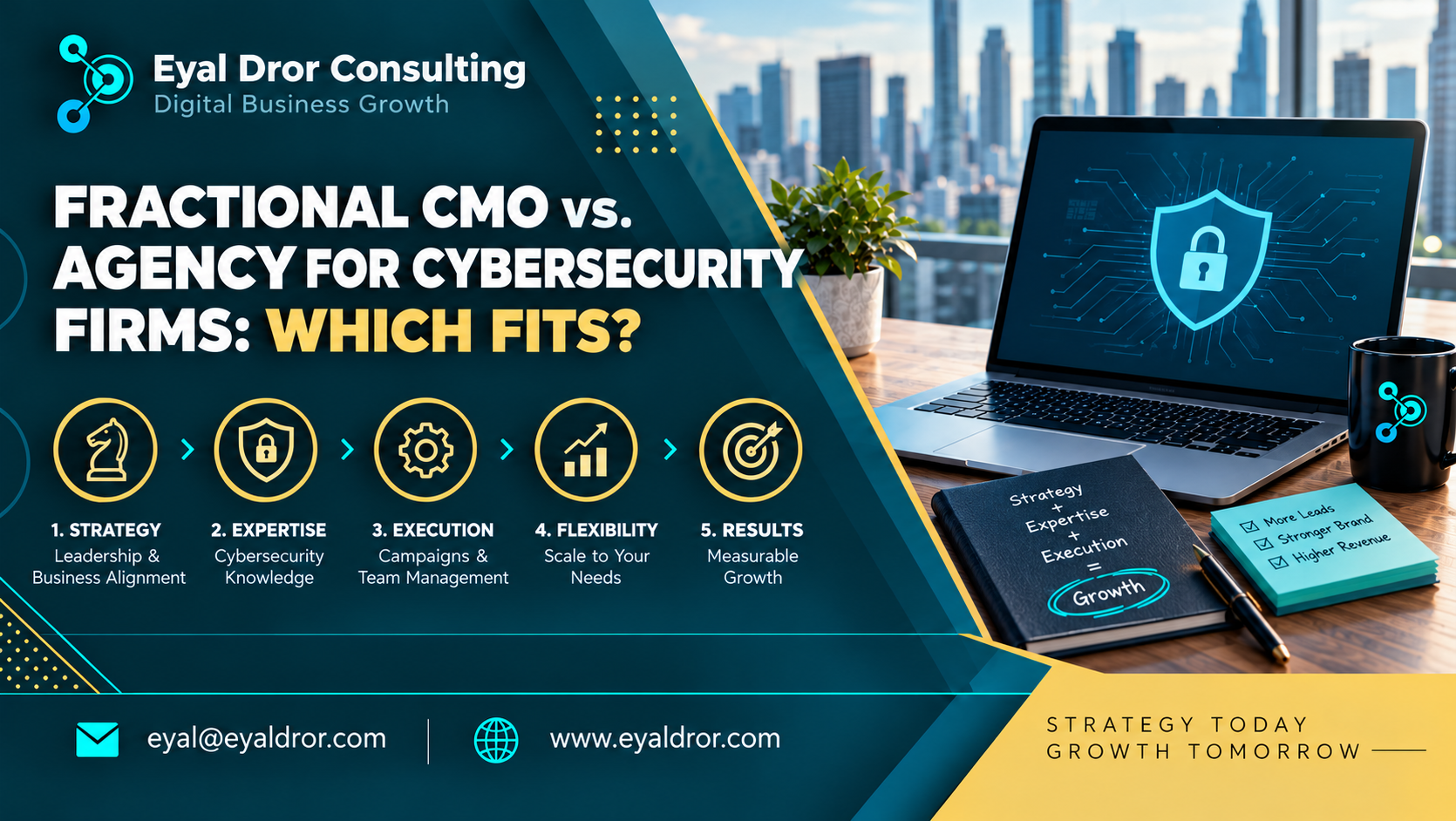
Fractional CMO vs Agency: which is the right choice for a cybersecurity company? Cybersecurity companies sell something hard to explain to buyers who are skeptical by default. The product is technical, the sales cycle is long, and trust has to be earned before anyone will take a demo. This guide compares a Cybersecurity Fractional CMO and a marketing agency on responsibilities, expertise, cost, execution and business goals, so you can pick the one that fits where your company is today.
When it’s time to add marketing leadership, two options come up most often: a Cybersecurity Fractional CMO or a marketing agency. They solve different problems. This guide compares them on responsibilities, expertise, cost, execution and business goals, so you can pick the one that fits where your company is today.
What Is a Cybersecurity Fractional CMO?
A fractional chief marketing officer is a senior marketing executive who works with your company part-time, without the cost of a full-time hire. For cybersecurity companies, the role is to set marketing direction and make sure it connects to revenue.
Typical responsibilities include marketing strategy, positioning, demand generation, budget allocation and team leadership.
It makes sense to hire a fractional CMO for cybersecurity firms when you require a senior-level executive, yet not a permanent one, or when marketing efforts have expanded without a strategy in place.
What Does a Cybersecurity Marketing Agency Do?
A specialized agency helps in the execution of marketing and campaign management. Typical services include content marketing, SEO, paid advertising, public relations, and lead generation.
Agencies usually work with an internal marketing team or business leadership that sets the direction. They deliver the agreed services and campaigns.
Cybersecurity Fractional CMO vs. Agency: Key Differences
1. Strategic Leadership and Business Alignment
The fractional CMO provides executive-level marketing expertise. They have ownership of the plan and connect marketing efforts with revenue and goals.
The agency runs campaigns in a defined scope. Alignment with revenue is based on the brief that is provided, and the agency will not question the strategy unless asked.
2. Cybersecurity Industry Expertise
Security buyers are technical, cautious and often involve several stakeholders. Credibility matters more than clever copy.
Ask either option how they have handled long sales cycles, technical messaging and distrustful buyers. Industry knowledge matters because a message that misreads the buyer costs months of pipeline.
3. Marketing Execution and Team Management
A fractional CMO leads strategy and priorities, and manages internal teams. They decide the plan, set priorities and coach the people who carry it out.
An agency delivers the agreed marketing services and campaigns. A fractional CMO may coordinate agency partners when needed, which keeps execution aligned with direction.
4. Flexibility and Scalability
Fractional support is highly flexible. Time commitment can vary according to your requirements, from initial supervision to near-full time support as you drive for growth.
Agencies operate through service packages. Changes in scope or priority can necessitate renegotiating the package.
5. Accountability and Performance Measurement
The fractional CMO is responsible for the direction of the marketing and its success. The agency is responsible for deliverables, such as the content created, campaigns executed or ranking.
Both should be measured against business metrics, including qualified leads, pipeline contribution, conversion rates and customer acquisition cost.
Fractional CMO Cost vs. Agency Cost for Cybersecurity Firms
Cost depends on what you are buying, so compare the total cost of leadership, execution and internal resources, not just the monthly fee.
Fractional CMO cost is shaped by the executive’s experience, how many days a week they commit, the scope of the work and the engagement structure. On our fractional CMO service page, for example, engagement levels run from two days per week up to four or five, on a fixed monthly retainer with an initial commitment and then a flexible arrangement. A full-time CMO, by comparison, typically requires a six-figure package plus equity.
Agency pricing depends on the scope of services, the complexity of campaigns, the channels you choose and your advertising spend. Ad budgets are usually separate from the agency fee.
An agency fee does not include strategic leadership, and a fractional CMO fee does not include campaign production, so you may need to budget for both. I won’t quote fixed figures here, because rates vary and should come from a current proposal.
When Should a Cybersecurity Firm Hire a Fractional CMO?
A fractional CMO is usually the better fit in four situations:
- You need senior marketing leadership but not a full-time executive.
- Marketing activities lack a clear strategy or alignment with revenue goals.
- The company needs stronger positioning, demand generation or go-to-market planning.
- Existing marketing staff or external agencies need strategic direction.
When Is a Marketing Agency the Better Choice?
An agency is usually the better fit in three situations:
- You already have a clear marketing strategy and need execution support.
- You need specialized expertise in SEO, paid media, content or public relations.
- You need additional campaign capacity without hiring internal specialists.
Can Cybersecurity Firms Use a Fractional CMO and an Agency Together?
Yes, and it is often the strongest setup. The fractional CMO leads strategy, and the agency handles specialized execution.
For it to work, coordinate responsibilities, budgets, KPIs and reporting. Clear ownership prevents duplicated work, and regular performance reviews keep both accountable to the same numbers.
How Eyal Dror Supports Cybersecurity Marketing Leadership
Eyal Dror helps companies connect marketing strategy with business and revenue goals, covering positioning, go-to-market planning, demand generation and team leadership. For cybersecurity firms, the plan is built around how security buyers evaluate vendors.
You can learn more about the service on the Cybersecurity Fractional CMO page. For background on what the role covers, read our guide to the fractional CMO role and benefits.
If your marketing needs direction before more output, explore fractional marketing leadership with Eyal Dror.
Frequently Asked Questions
1. What Is the Difference Between a Fractional CMO and a Marketing Agency?
A fractional CMO is a senior executive who works on a part-time basis and creates strategies. The agency will offer particular service like content, SEO or media. In summary, one offers the leadership and direction whereas the other offers the execution capacity.
2. How Much Does a Fractional CMO Cost for a Cybersecurity Company?
It depends on the executive’s experience, time commitment, scope and engagement structure. Many fractional CMOs charge a fixed monthly retainer. It is typically less than a full-time CMO, who usually requires a six-figure package plus equity. Ask for a scoped proposal.
3. Is a Fractional CMO for Cybersecurity Companies Worth It?
It can be, when you need senior leadership without a full-time executive. The value comes from clearer positioning, better-aligned spend and a plan tied to revenue.
4. Can a Fractional CMO Work With an Existing Marketing Agency?
Yes. A fractional CMO determines the strategy and manages the agency relationship, determining the brief, KPIs, and reporting.
5. When Should a Cybersecurity Company Hire a Fractional CMO?
It makes sense to hire a part-time Chief Marketing Officer when marketing does not have a defined strategy, poor positioning exists, there are issues with generating demand, or when direction is required for your team or external agencies.
6. Should a Growing Cybersecurity Firm Choose a Fractional CMO or an Agency?
Choose a fractional CMO if the gap is strategy and leadership. Choose an agency if the strategy is clear and you need execution. Many growing firms use both, with the fractional CMO directing an agency that handles specialized channels.
