
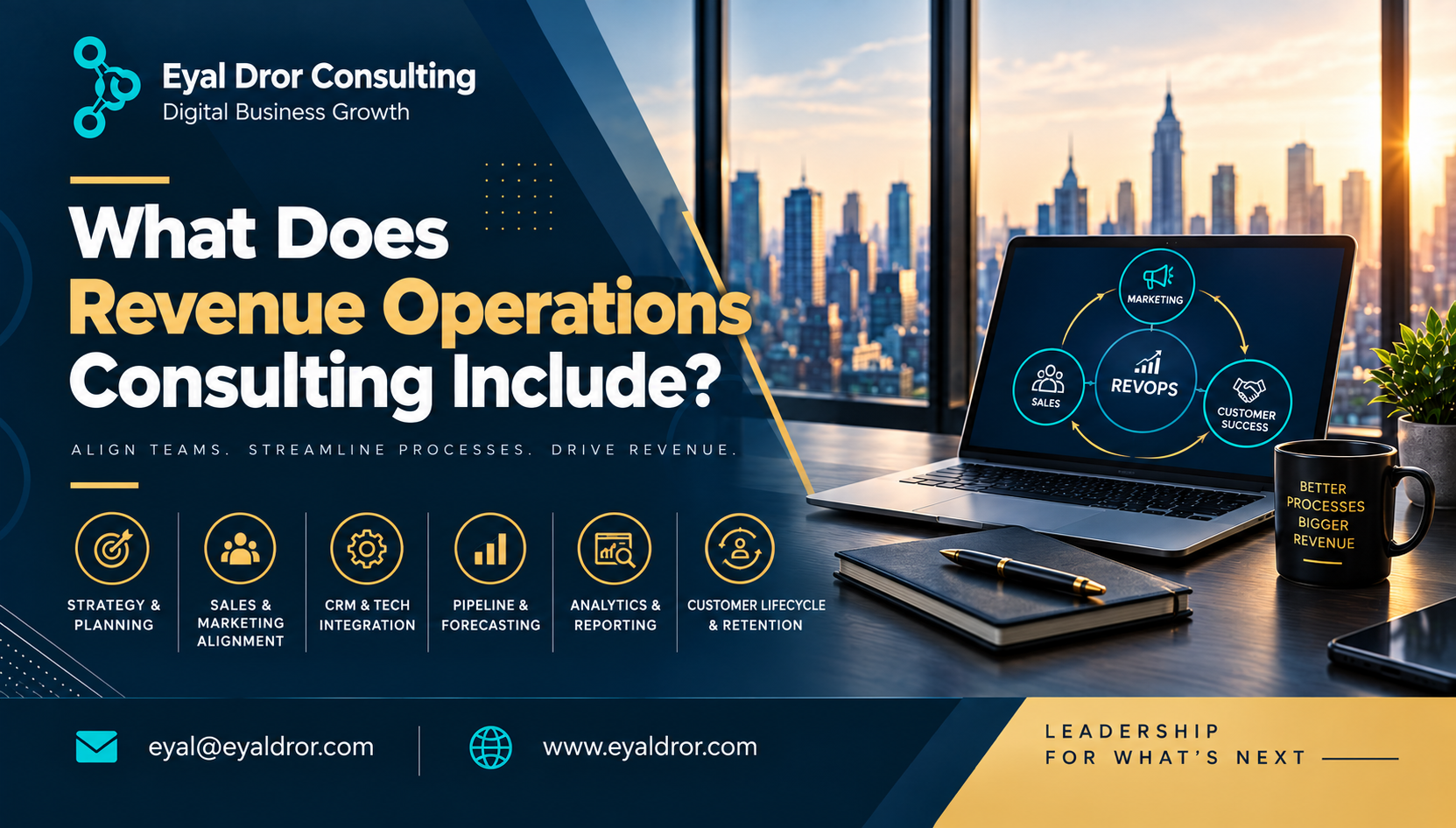
Revenue operations consulting is the process of integrating sales, marketing and customer success functions around a common set of processes, data and goals. It can be a single revenue engine for the business, rather than three teams optimizing their own metrics with improved operational efficiency, better revenue visibility, and more predictable revenue growth. Here’s what it really contains.
What Is Revenue Operations Consulting?
Revenue operations consulting is a consultancy and implementation service designed to audit and reimagine your company’s revenue operations and processes. It’s designed to eliminate departmental silos and ensure that all customer interactions, from initial contact through renewal, are based on shared definitions, shared data, and shared responsibility.
In the real world, a RevOps consultant is responsible for linking four things: teams, processes, data, and technology. Common goals, clear handoff rules, standardized data for reports means everyone understands what they are reporting on, and technology, such as your CRM, will be configured to support the process instead of hinder it.
It is not a sales operation consult that is about sales territories, quotas and sales tooling. RevOps is more holistic and takes marketing and customer success into account, since revenue issues don’t just happen within the sales department.
What Does Revenue Operations Consulting Include?
A typical engagement covers six core areas. The depth of each depends on your size and maturity, but the building blocks are consistent.
Revenue Operations Strategy and Planning
Each engagement begins by examining how the business currently generates revenues. The consultant documents the existing processes and pinpoints any pain points or areas of duplication within them, including possible points where deals stall or are uncertain. They then create a roadmap that’s aligned to your business goals and that implements the most important fixes first.
Sales and Marketing Alignment
Misalignment between sales and marketing is one of the most expensive problems RevOps addresses. Consultants work with both teams to define what a qualified lead is, how leads are handed off, and what response times are expected. They also establish shared goals and metrics, so marketing is measured on revenue contribution rather than lead volume alone, and sales is accountable for following up.
CRM Optimization and Technology Integration
Your CRM is the main component of RevOps, and frequently the weakest. This work helps to clean up workflows that have grown over the years, and to improve data quality by means of standardized fields, deduplication and validation rules. Consultants can also pinpoint automation and integration opportunities, including integrating your marketing platform, CRM and billing system so that data flows without having to be re-entered manually.
Sales Pipeline Management and Revenue Forecasting
Here the focus is on how deals move. A consultant evaluates your conversion pipeline stages and verifies that stage definitions are uniform and identifies conversion bottlenecks. When stages are clear and data is added consistently, forecasting is improved; and leadership can rely on data, not rep optimism:
Revenue Analytics and Performance Reporting
You can’t manage what you can’t see. The component outlines the revenue KPIs that are important for your model, including pipeline coverage, stage conversion rates, sales cycle length, and net revenue retention. Consultants then recreate dashboards for every team that allows everyone to see performance from a single source in one place instead of a myriad of spreadsheets.
Customer Lifecycle and Retention Optimization
Revenue doesn’t end when a deal closes. RevOps focuses on the processes by which customers are handed over from sales to onboarding to account management, and identifies the at-risk accounts earlier and offers opportunities to sell more to existing customers in the base.
What Are the Benefits of Revenue Operations Consulting?
When the work is done well, the benefits show up across the business:
- Improved sales and marketing alignment, with fewer disputes over lead quality and credit
- More efficient workflows, with less manual data entry and fewer process bottlenecks
- Better data-driven decision-making, because everyone trusts the same numbers
- More reliable revenue forecasting, which supports hiring, budgeting, and investment decisions
- Improved visibility into revenue performance, from top-of-funnel activity through to renewals
When Should a Business Consider Revenue Operations Consulting?
Certain warning signs suggest the problem is structural rather than something a single new hire or tool can solve:
- Sales and marketing processes are disconnected, and each team tells a different story about performance
- CRM data is inaccurate or incomplete, making reports unreliable
- Revenue forecasts regularly miss the mark
- Manual, repetitive workflows consume your team’s time
- You’re struggling to scale revenue operations as the business grows
If two or three of these sound familiar, a RevOps review is likely worth the investment.
How Can Eyal Dror Help With Revenue Operations Consulting?
A strong revenue operations strategy can transform growth into a plan and a measurable process. Eyal Dror Consulting can help businesses do that by linking together business functions that are commonly isolated.
This support can range from fractional CRO, having a senior revenue leader without the full-time executive hire, to pipeline optimization, where we identify stage by stage drop-off and optimize the process that gets deals to the next stage; sales and marketing alignment, where we can help define the common definitions, handoffs, and metrics that will allow sales and marketing to move in lockstep.
You can explore the full range of Eyal Dror consulting services to see how these pieces fit together. If your revenue process feels fragmented or unpredictable, we’d welcome the chance to talk through it. Reach out to discuss your revenue operations challenges and find out where the biggest opportunities sit.
Frequently Asked Questions
1. What Is Included in Revenue Operations Consulting?
It typically includes aspects of strategy and planning, sales and marketing alignment, CRM optimization and integration, pipeline management and forecasting, revenue analytics and reporting, as well as customer lifecycle optimization and retention, sized to your business requirements..
2. What Does a Revenue Operations Consultant Do?
A revenue operations consultant reviews your existing revenue processes and identifies inconsistencies between teams, suggests ways to streamline them, and can even assist in execution (including redesigning processes, scrubbing your CRM data and creating dashboards and KPIs).
3. How Is Revenue Operations Consulting Different From Sales Consulting?
Typically, sales consulting focuses on the sales team’s skills, methodology and performance. Revenue operations consulting spans the entire revenue lifecycle, from marketing to sales to customer success, and the business processes, data and technology that bridge them.
4. What Are the Benefits of Revenue Operations Consulting?
Stronger team alignment, more efficient workflows, better data-driven decisions, more reliable forecasting, and clearer visibility into revenue performance across the customer journey.
5. Which Businesses Need Revenue Operations Consulting?
Businesses with uneven data, inaccurate projections or siloed sales and marketing teams are best served, particularly those that outgrow the informal tactics that functioned well in the early days.
6. How Long Does Revenue Operations Consulting Take?
It depends on scope and complexity. The time to get to an initial assessment and roadmap can be several weeks and implementing CRM, reporting, and process changes can take several months. A few businesses provide continuous support after that.
Conclusion
Revenue operations consulting aligns sales, marketing and customer success on the same page via strategy, team alignment, CRM and tech optimization, pipeline discipline and forecasting, clear analytics, and lifecycle management. The combination of teams, processes and technology creates more predictable, efficient and growth revenue.
Ready to turn a fragmented revenue process into a connected one? Explore Eyal Dror’s Revenue Operations consulting services and start the conversation.
