
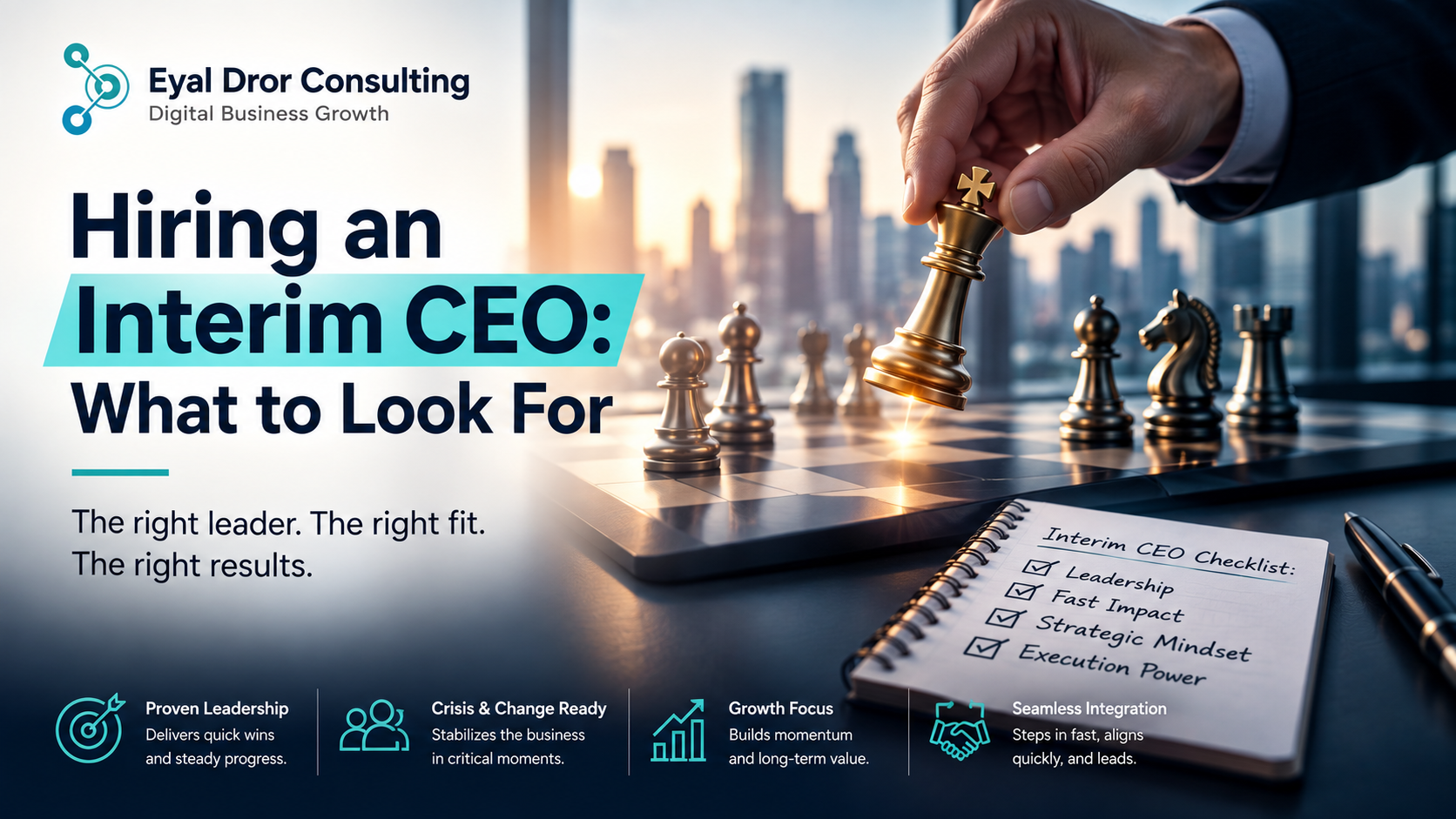
Losing a CEO, whether through resignation, termination, or an unexpected event, puts a company in a uniquely vulnerable position. The board needs to keep the business running smoothly while it searches for permanent leadership, and that search can take months. This is exactly the gap an interim CEO is built to fill.
But not every experienced executive makes a good interim CEO. The role requires a specific set of skills, temperament, and experience that differs meaningfully from what you’d look for in a permanent hire. Here’s what to actually look for when hiring one.
1. A Track Record of Fast, Effective Onboarding
When a CEO is in a permanent position, he or she has months if not years to get to know the culture, systems and people of a company before making any big decisions. That’s not an option for an interim CEO. They must walk in, learn the business and begin making appropriate decisions almost immediately.
Assess applicants’ ability to do this: Have they led in new environments before? How fast were they able to establish rapport with current staff and get things moving? The best interim CEOs will have a few specific stories to tell, rather than general ones, about companies they’ve stabilized, and often across industries.
2. Genuine Comfort With Ambiguity and Short Timelines
Interim positions are by definition, transient and frequently have flexible timelines. It may take three months or twelve months to find a new CEO. A great interim CEO must be okay with not knowing how long the engagement will be, and not have a long-term contract.
Don’t look for executives who find an interim job is just a stopgap until they find a better position; look for candidates who have made a conscious decision to pursue this kind of position. The former are more likely to come with a lot of energy, attention, and dedication to a short-term engagement than the latter.
3. A Bias Toward Stabilization, Not Reinvention
It is one of the most crucial traits, and the most neglected attribute. The role of an interim CEO is typically not to change the company’s strategy, or implement sweeping changes that could be difficult to undo. It is for maintaining business stability, continuity and for putting the business into a strong position for a smooth transition to permanent management.
Some candidates who are desperate to “leave their mark” may be holding them back in this post. The kind of person you need is one who can gauge a room, know what really needs doing and what doesn’t, and be judicious about it.
4. Strong Communication Skills, Especially With the Board
An interim CEO will be under the spotlight, because the board is likely to be more involved in seeking to replace the CEO while it is also keeping a close eye on the health of the business. This requires open, consistent and honest dialogue.
Pay attention to candidates’ communication during the hiring process. Is there a pro-active approach to marking up risks and concerns? Ask questions that try to clarify, instead of assuming? They tend to communicate during the interview process in a very similar manner to how they will do so in a board update once in the seat.
5. Experience Relevant to Your Specific Situation
Not all interim CEO engagements are the same. Some are triggered by a sudden resignation with no real underlying business problems, just a temporary leadership gap. Others involve companies in genuine distress, requiring turnaround expertise. Still others involve preparing a business for a sale or acquisition during the transition period.
Make sure the candidate’s experience matches your actual situation:
- Simple leadership gap: Look for steady, safe-hands operators with strong general management experience.
- Turnaround situation: Look for candidates with specific, demonstrated experience stabilizing distressed companies, ideally in your industry or a closely adjacent one.
- Pre-transaction period: Look for executives who understand financial and operational readiness for M&A, and who can keep the business “sale-ready” throughout the transition.
6. A Clear Understanding of Their Own Endpoint
Interim roles are temporary, and the best candidates are those who from the beginning consider how they are going to exit the role and try to make the transition with a permanent CEO as easy as possible. It involves documenting decisions, establishing repeatable processes and when making decisions avoiding decisions that would be hard for a successor to unwind.
Directly ask candidates: “What do you think about leaving a job like this?” Their response will give you a good idea if they’re thinking about the long-term health of your business or are just keeping their own job.
7. Cultural Fit, Even for a Short Engagement
It may seem like culture fit isn’t a big deal for a temporary worker, but that’s not always the case. But when an interim CEO can’t get along with the current leadership team or company culture, he or she can cause more disruption in a matter of months than a bad permanent hire would in a year, just because there is no time to gradually establish alignment. During the hiring process, check for candidates who inquire about your culture and values in addition to the specific duties of the position.
Red Flags to Watch For
A few warning signs are worth taking seriously during the hiring process:
- Vague or evasive answers about past interim engagements and how they ended
- A visible eagerness to make major strategic changes immediately
- Discomfort discussing their own exit or handoff plan
- Limited or unclear communication style during the interview process itself
- No clear rationale for why they’ve chosen interim work as a career path
Making the Right Hire
An interim CEO is a high-stakes hire that is done under time pressure, so it’s important that you have a clear plan in place. Look for candidates who are fast onboarding, embrace ambiguity, are not searching for a formula for success, communicate with boards, have experience in the situations relevant to them, have a clear plan for how they will land at the end of their tenure, and are culturally aware. Correctly executed, an interim CEO will not only keep your business afloat, but they will also further it in a meaningful way during a challenging period.
Keep Your Brand Strong Through the Transition
A leadership transition doesn’t have to mean a pause in growth. While your interim CEO stabilizes operations internally, your brand and marketing presence still need to keep moving externally.
That’s where Eyal Dror Consulting comes in. We help businesses maintain and strengthen their digital marketing strategy through periods of leadership change, so momentum never stalls. Visit eyaldror.com today to learn how we can support your business through this transition and beyond.

Leave a Comment