
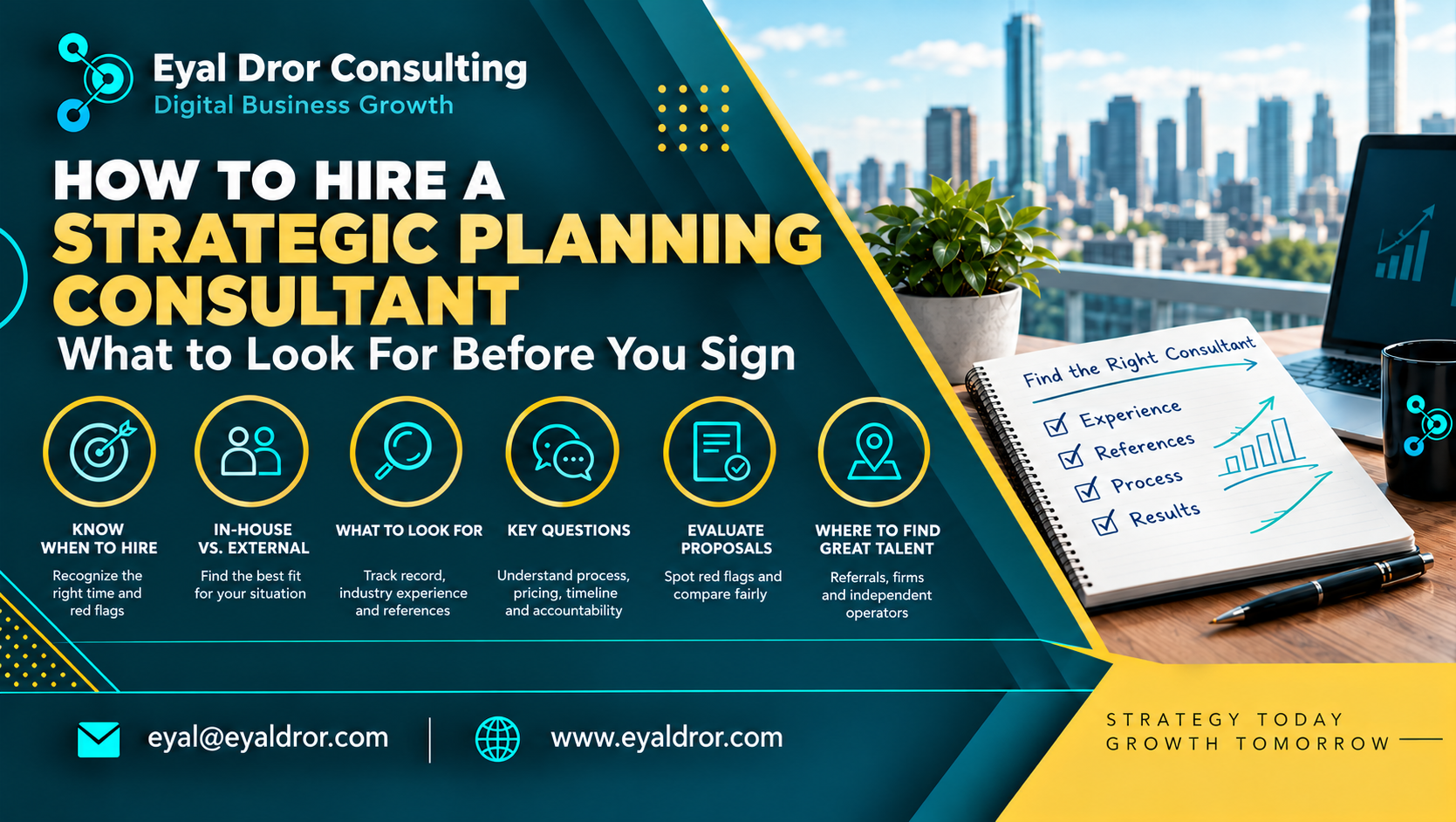
Hiring a strategic planning consultant feels straightforward until you actually start the search. All of a sudden you are dealing with generalists versus operators, firms versus independents, and proposals that sound the same, but offer completely different results. This guide takes you through the process of hiring, how to know when you’ve found a good one, the questions that really count, and the pitfalls that can make an otherwise well-intentioned book an expensive shelf document.
When to Hire a Strategic Planning Consultant
Signs You’re Ready (and Signs You’re Not)
You are ready the moment your leadership recognizes the real strategic gap. Other signs may include unclear priorities, misaligned teams, stalled growth and lack of approach to address it objectively. If the organization hasn’t reached some consensus on basic direction at all then you’re not ready, because a consultant cannot create the consensus, and if there’s no real investment beyond the consultant’s bill then there’s no way to implement whatever the plan says.
In-House vs. External, Which Fits Your Situation
For larger organisations with ongoing, embedded strategic work throughout the year, an in-house strategy lead is a good idea. An external consultant is more appropriate for a defined planning cycle or when you have a leadership transition or funding round, or when you are specifically looking for an outside point of view that isn’t affected by internal politics.
In some of these situations, that outside perspective comes in the form of a fractional CEO who can guide strategy on a part-time basis without the cost of a full-time executive hire. The external category is assigned to the majority of small and mid-sized businesses as it is not cost-effective to continually maintain the workload of a full-time strategy hire.
What to Look For Before You Sign
Track Record of Execution, Not Just Strategy
A polished strategy document is easy to produce. Getting an organization to actually execute against it is the hard part, and it’s the part that separates a good consultant from a mediocre one. Ask specifically what happened after previous engagements ended, not just what was delivered on paper.
Relevant Industry and Stage Experience
A consultant who has served businesses with similar size and stage knows what you’re dealing with, the constraints are real, you have limited resources, unique team dynamics, unique market pressures, in a way that a generalist working just from frameworks often doesn’t. This is not to say you have to have a person from your specific subsector, but more importantly than most founders realize going in is stage and scale familiarity.
For a closer look at what this kind of experience should look like in practice, see our guide on what a strategic business planning consultant actually does and when to bring one in.
References and Proof of Results
Ask for references from companies genuinely similar to yours, and actually call them. Talk with those references, not just about how it felt for them, but about what happened to them after the engagement. If the consultant is confident in their work, they will not hesitate to put you in touch with some of their previous clients who can provide you with some specific feedback regarding the outcomes.
Questions to Ask Every Candidate
About Their Process and Deliverables
Ask what their process looks like from first conversation to finished plan. Ask for specific responses on what you’re getting, a written plan, a presentation, implementation support and how they involve those who will be putting the plan into practice, not only leadership.
About Pricing, Timeline, and Accountability
Inquire about their pricing structure and what’s covered in the fee of their engagement. Expect a realistic time frame and don’t accept anyone who guarantees a full strategic plan in a week or two.
For a sense of what a reasonable budget looks like, our breakdown of what a strategic planning consultant costs walks through typical pricing models by engagement type. Then inquire about what happens when it comes time for accountability when the plan is presented to them whether it be a follow-up review, retainer, or a clean handoff.
How to Vet a Consultant’s Proposal
What a Strong Scope of Work Includesbusiness growth consulting
A strong proposal should include a clear process for action, have a realistic timeframe, clearly state what will be accomplished and state how stakeholder input will be obtained. If you compare proposals side by side, it is worth understanding what a serious strategic consulting engagement typically includes.
Whether the scope centers on strategic planning, business model innovation consulting, or operational efficiency, the proposal should name the specific deliverable rather than lean on marketing language alone. This gives you a real benchmark for what a well-scoped proposal should look like rather than guessing.
Red Flags That Signal a Bad Fit
Be cautious of proposals that appear to be a template with your company’s name in it. Be alert to general responses about what success will look like. Also, stay away from anyone who doesn’t talk with your team and check your numbers before introducing a complete plan. This means they’ve already made up their mind before the diagnosis took place.
Where to Find Qualified Strategic Planning Consultants
Referrals, Firms, and Independent Operators
Recommendations from other founders/executives who have already gone through it are the strongest signal, as they can tell you what worked and didn’t work. Larger companies offer more organized processes and greater workforce, and are ideal for larger companies with a more expansive reach. Independent operators have more first-hand knowledge and may be more suitable for smaller and mid-sized businesses, where direct interaction is more beneficial as opposed to going through a junior employee.
How to Compare Shortlisted Candidates
Once you’ve got a shortlist, compare them on the same criteria every time, process clarity, relevant experience, reference quality, and pricing transparency. Resist the temptation to make a decision based on personality or the most polished presentation. It’s often the consultant with the sharpest questioning that sounds more like a good indication than the one with the best presentation in your initial meeting.
Making the Hire
The right hire ultimately comes down to two things working together, genuine understanding of your business and mission, and a real track record of getting organizations to follow through on what gets planned. Either one alone isn’t enough. A consultant who understands your business perfectly but can’t drive execution leaves you with a nice document.
One who’s great at execution but doesn’t understand your specific situation ends up recommending the wrong things well. You need both, whether the engagement is framed as strategic planning or broader business growth consulting, and it’s worth taking the extra time in the vetting process to confirm you’re actually getting them.
FAQs
1. How do you hire a strategic planning consultant?
First, ensure leadership is on the same page about the strategic need. Then shortlist the candidates by referrals or outreach, screen them on process, relevant experience and references. Finally, compare proposals based on the same criteria before signing.
2. What should you look for in a strategic planning consultant?
Look for a genuine track record of execution beyond just strategy documents, relevant industry and stage experience. And do not forget the references who can speak concretely to what changed after the engagement.
3. What questions should I ask before hiring a strategy consultant?
Ask about their process, what exactly is being provided, how they get input from the team that is going to implement their plan, how they account for their engagements, and how they hold the team accountable once the plan is delivered.
4. How long does it take to see results after hiring one?
It depends on the extent of the engagement. Most organizations begin to experience real clarity and decision-making improvement within a few months of the engagement. So the results are realized as the plan is executed over the course of a year.
5. Should I hire an independent consultant or a firm?
It depends on your organization’s size and needs. Sometimes independent consultants work best with small and medium-sized companies as they have more hands-on experience. Sometimes firms work better with larger organizations that require more structure and teams.
